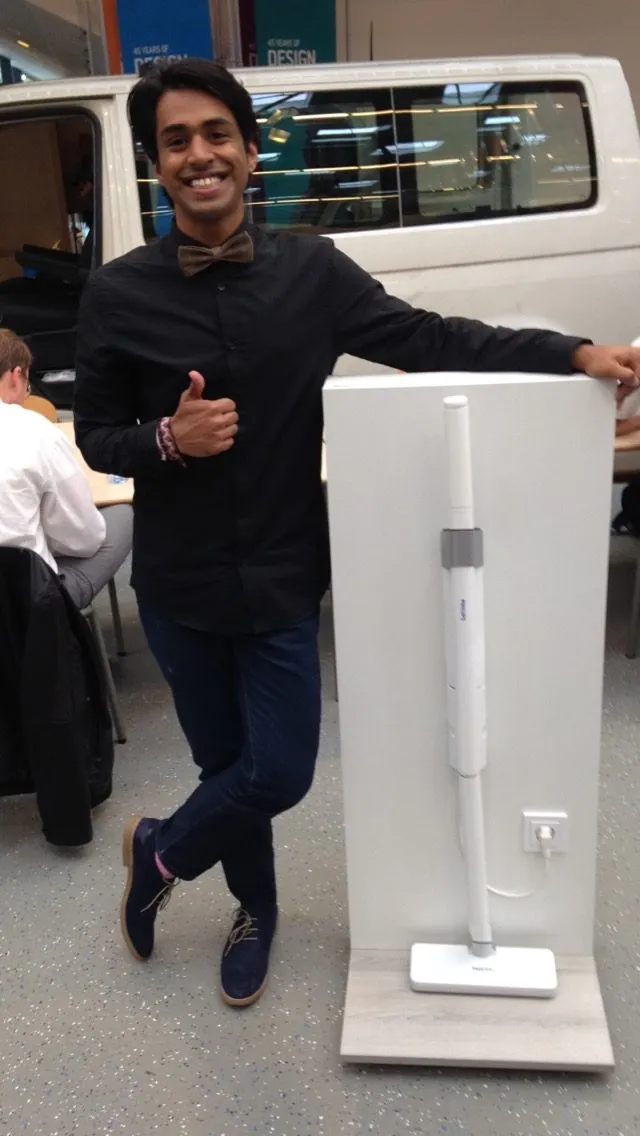
Problem
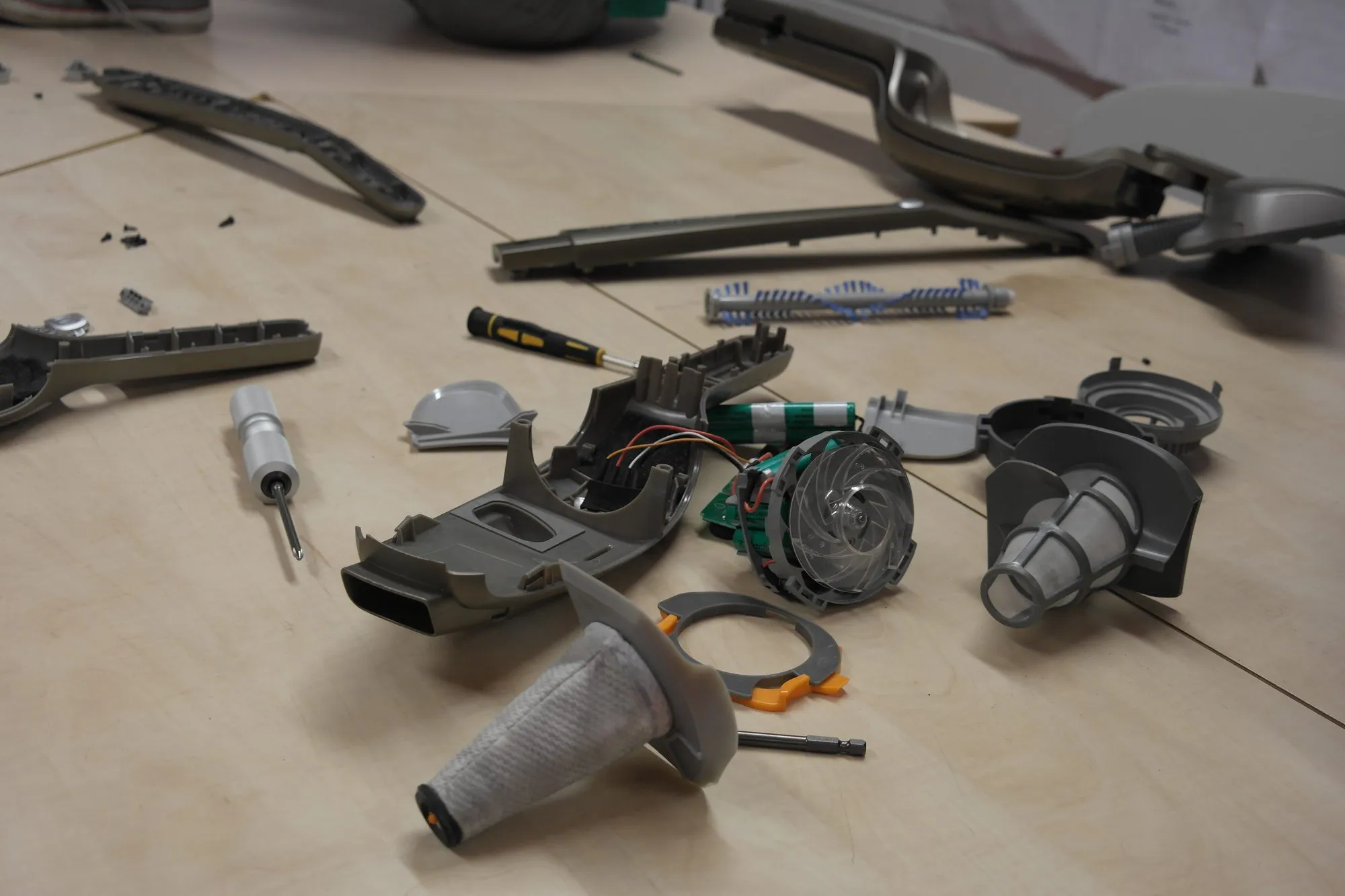
Philips asked us to design a minimalistic stick vacuum cleaner with a bag, for quick cleaning jobs.
It was never going to win on suction. Independent testing put cordless stick cleaners well behind canister machines: one model picked up a fifth of the dust spilled on a carpet, the best of them three quarters. So it had to win on whether you reached for it at all. A broom is quick because it stands in the corner, but it pushes dust into the air. A vacuum cleans properly, and living with one means a cupboard, a cable, a plug, and a decision about whether the mess is worth it.
Which meant something light enough to stand in the living room and get picked up for a five minute job. The internals argued against that. The smallest motor available was the Dyson V6 unit, 55mm across, spinning at 120,000 rpm. The bag needed 0.6 litres. Six lithium cells. All of it inside a stick that should read as one line, under two kilos, at thirty to forty euros to make.
Process
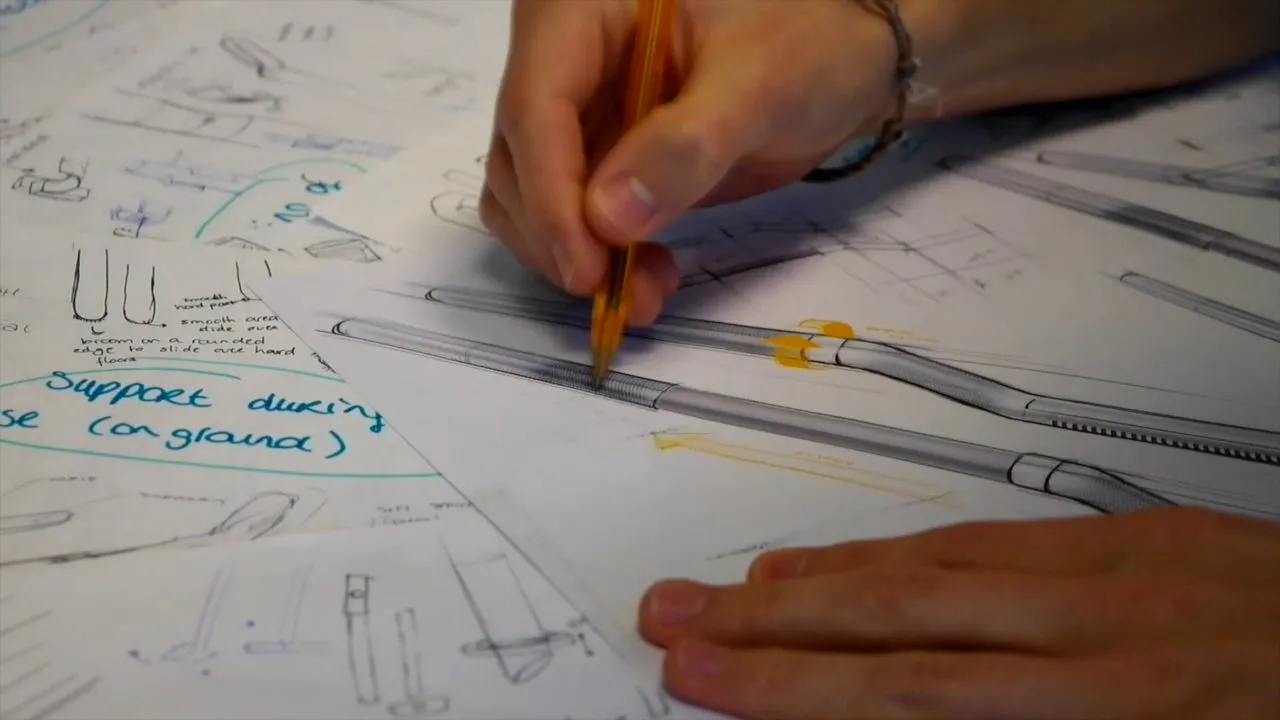
We stayed on paper longer than felt comfortable. A stick is a simple object, so most of the early argument was about proportion: where the mass sits, how the grip meets the tube, what the base has to do to slide over a hard floor without catching on it.
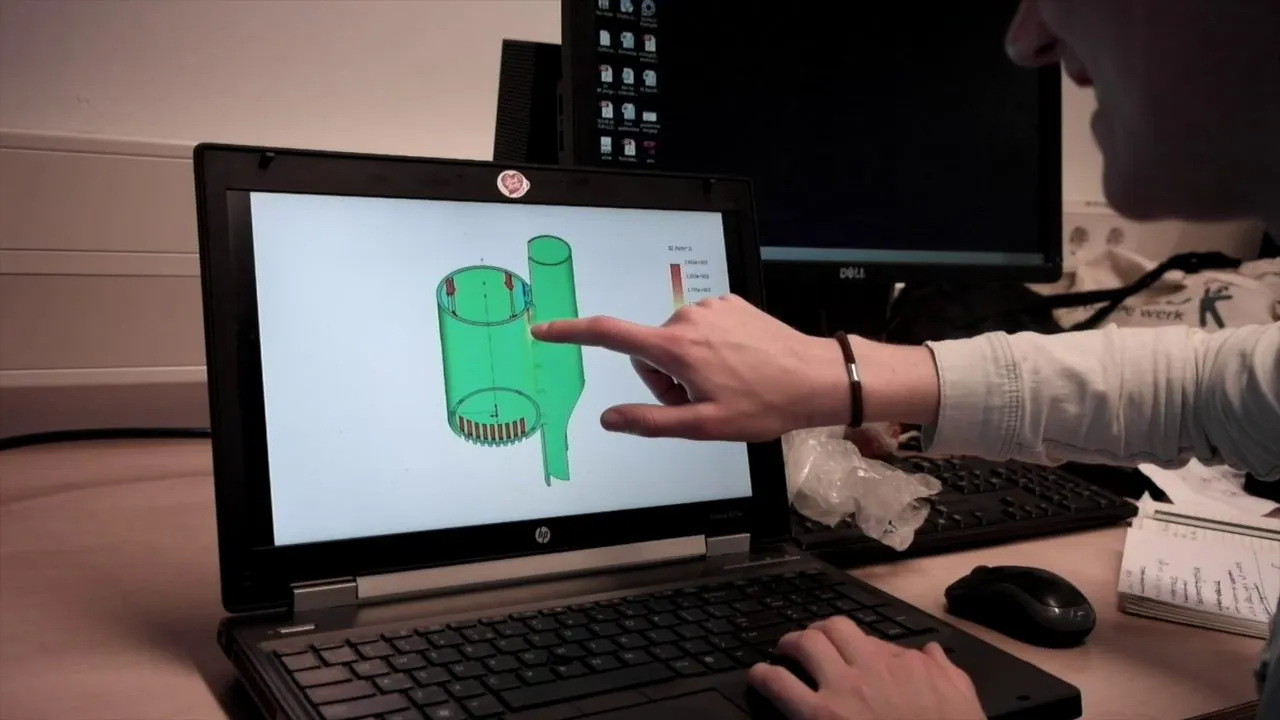
Then CAD, and simulation earlier than we would normally bother, because the whole product depends on air making a 180 degree turn inside the body.
The nozzle took more of the quarter than we had planned. The idea was to funnel dirt from a wide floor area into a narrow suction point, so a weak motor would go further. We printed the forms, taped them onto existing vacuum cleaners, and tested them on measured portions of rice.
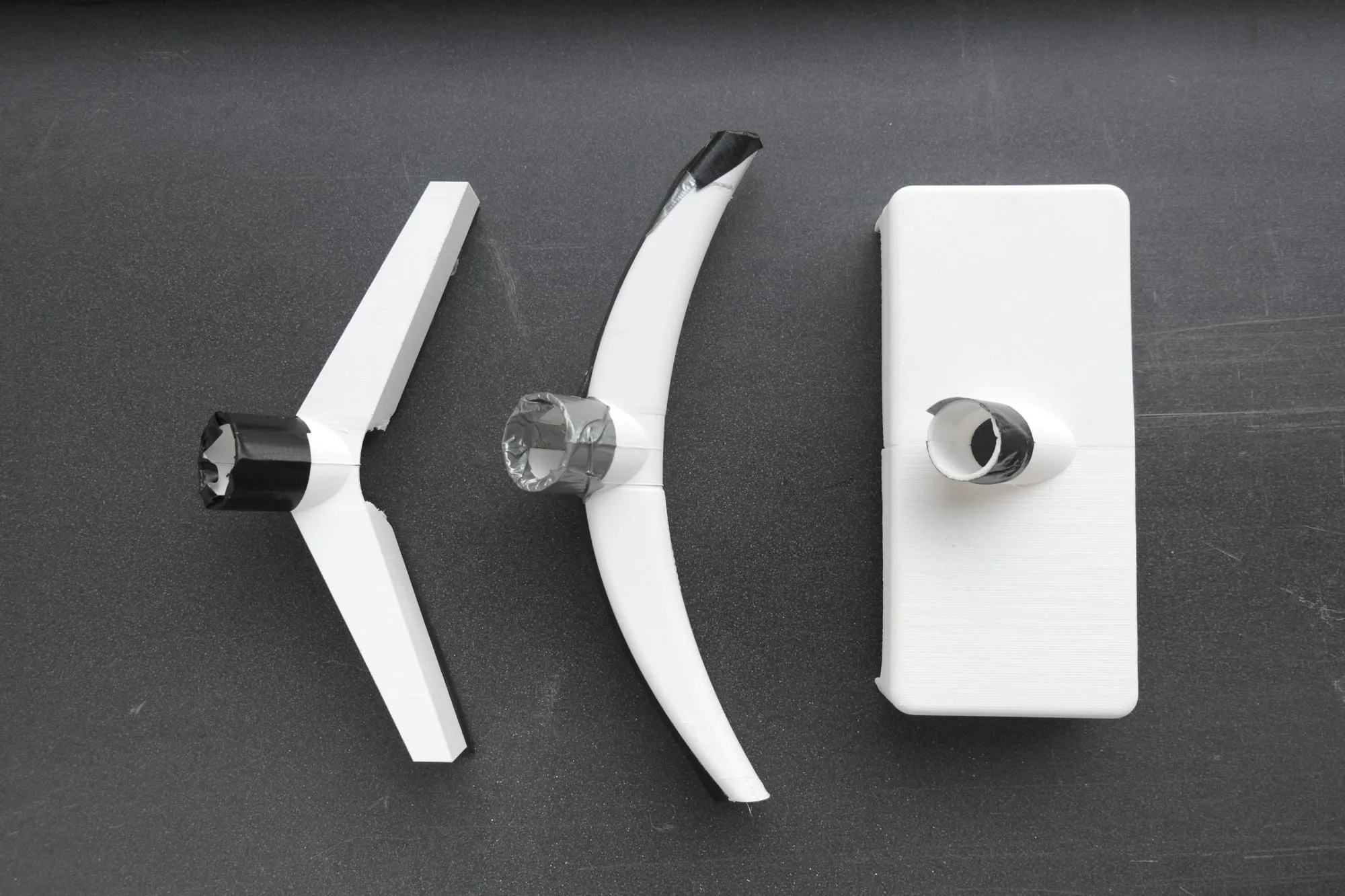
It worked in one direction only. Push forward and the nozzle guided dirt properly, pull it back and the corners lifted and dirt slipped underneath. We tried hinged rubber wipers that would flip with the direction of travel. The hinges worked, but the height needed to let them swing opened gaps along the base, and suction dropped enough to undo the gain. We stopped. It was a good idea that needed more weeks than we had, and I still think it would work if someone detailed it properly. We fell back to adapting the base geometry of the Philips TriActive Z nozzle, which had the side benefit of being something Philips could actually manufacture.
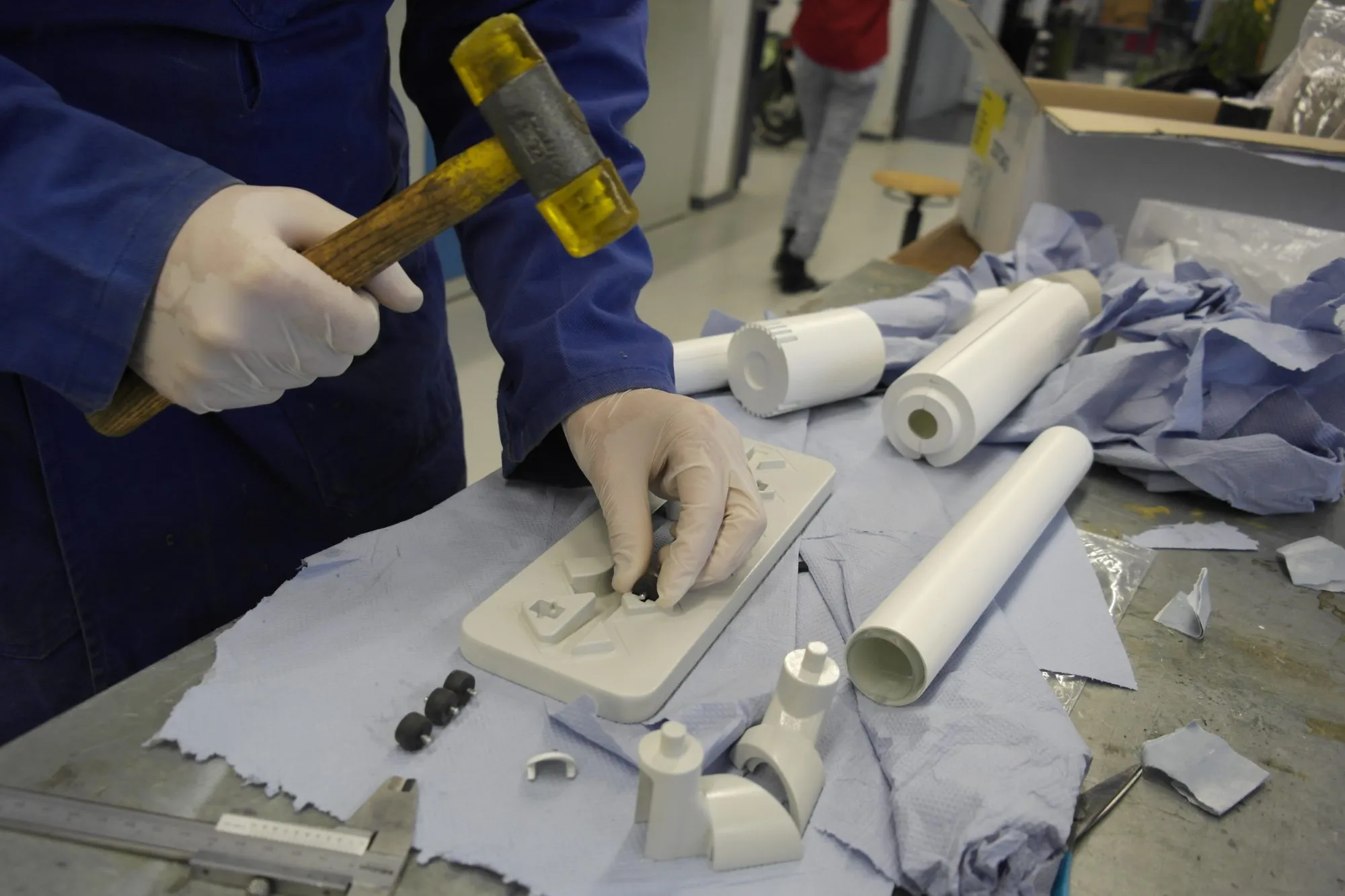
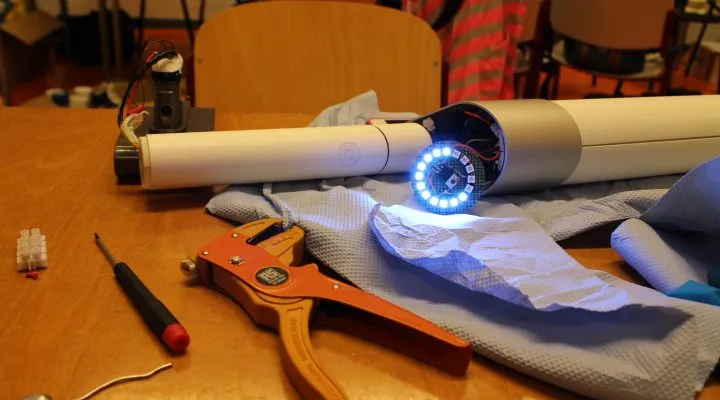
Everything on the prototype was printed, sanded, sprayed and fitted by hand over about two weeks.
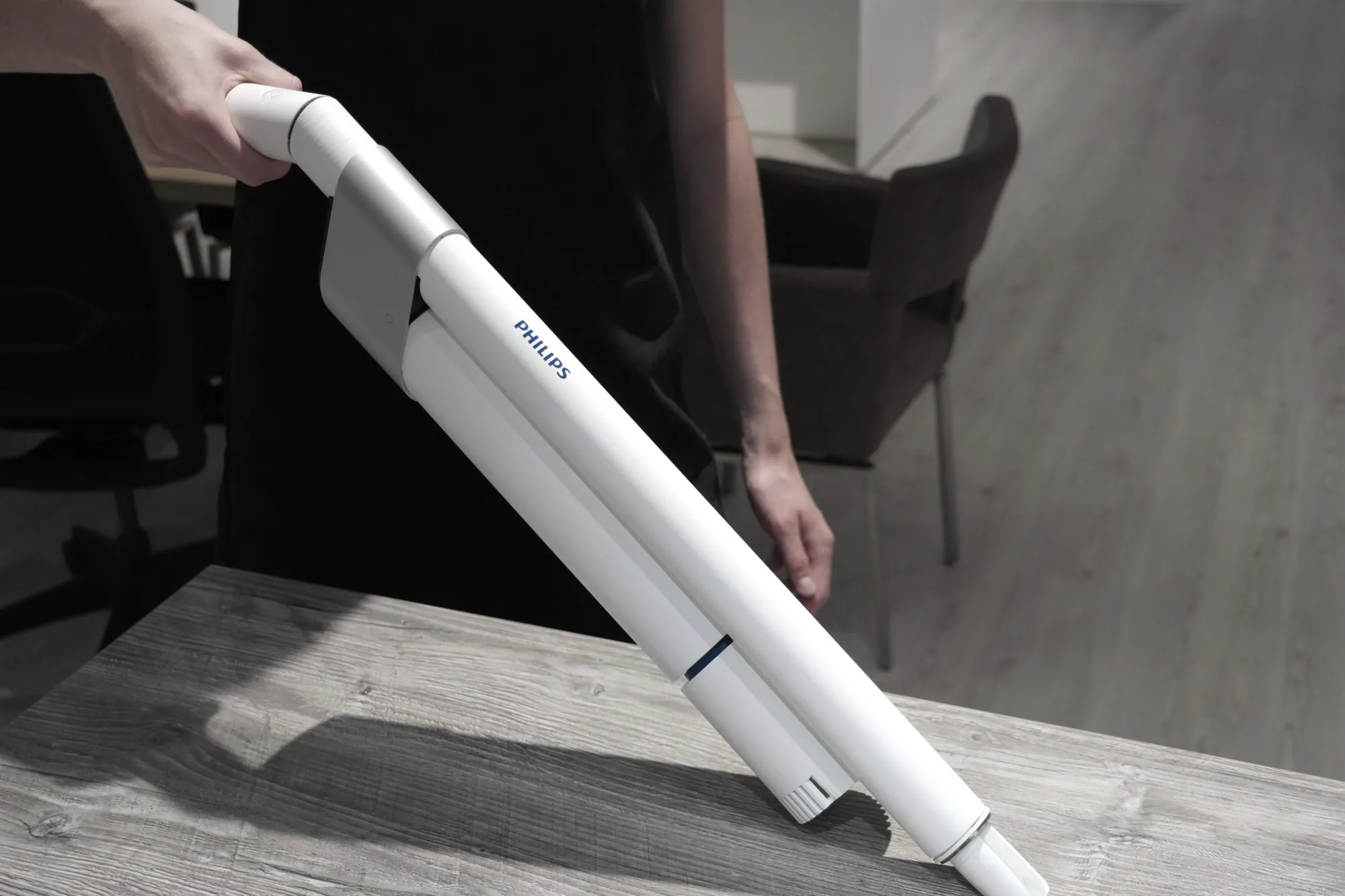
One part is not plastic. The bracket you slide to release the bag cylinder is machined aluminium, with the pivot pins pressed into it.
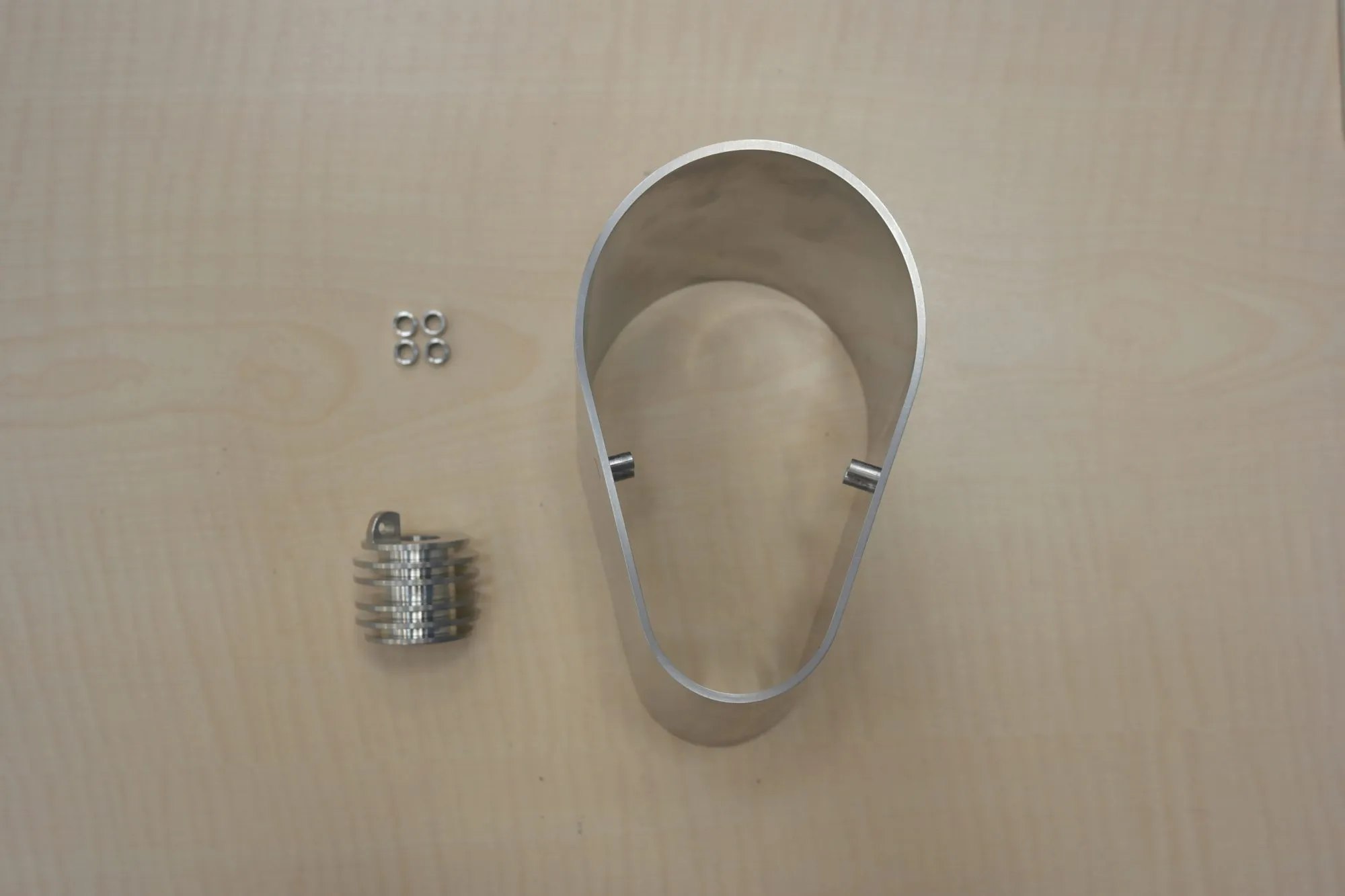
It is the one part you move every time you empty the bag. Plastic sliding on plastic, at the tolerances we could hold, would have caught and felt gritty. Metal keeps a closer fit and stays smooth, so the action the product asks of you most often feels deliberate rather than cheap. What it also gave us, without anyone setting out to do it, was the only hard band across the white, sitting exactly where the product comes apart.
The battery indicator went onto an Arduino with a NeoPixel ring and a soldered board carrying the regulator and resistors, calibrated against the real pack over several runs. The useful thing that came out of it was not the code. It was learning that the circular displays on products we admired are rectangular LCD modules behind a circular mask, which told us how much room the real part would need inside the housing.
Solution
Air turns 180 degrees inside the body. Up the tube, back down through the bag cylinder, out past the motor at the bottom. We measured 15 m/s through the finished assembly.
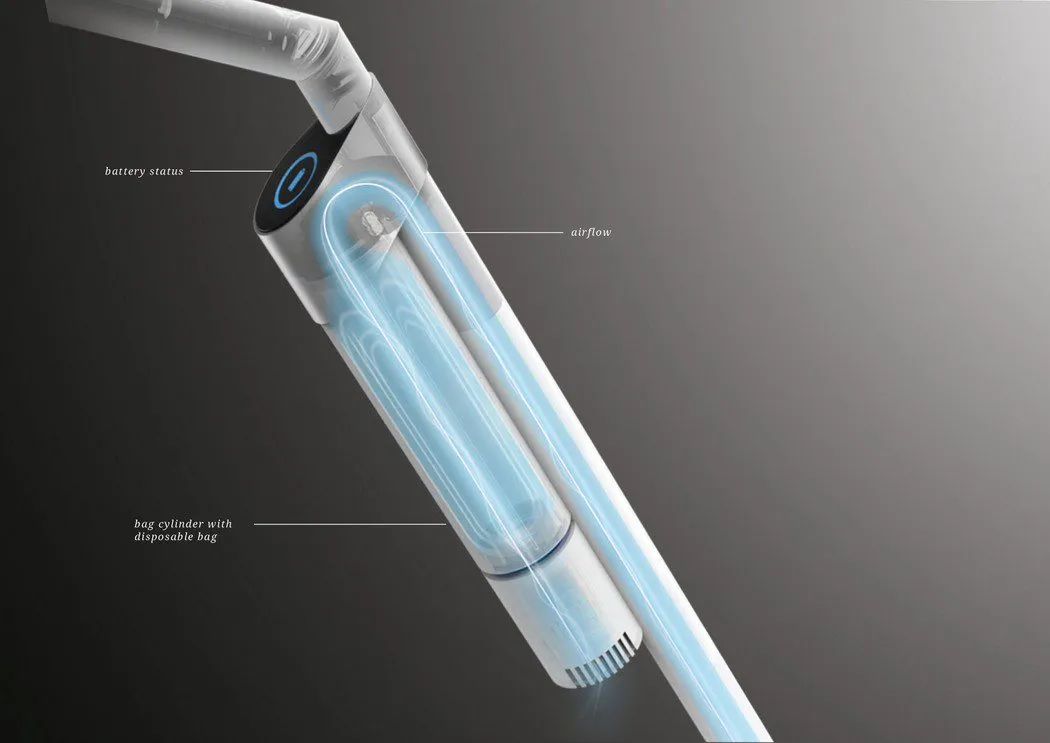
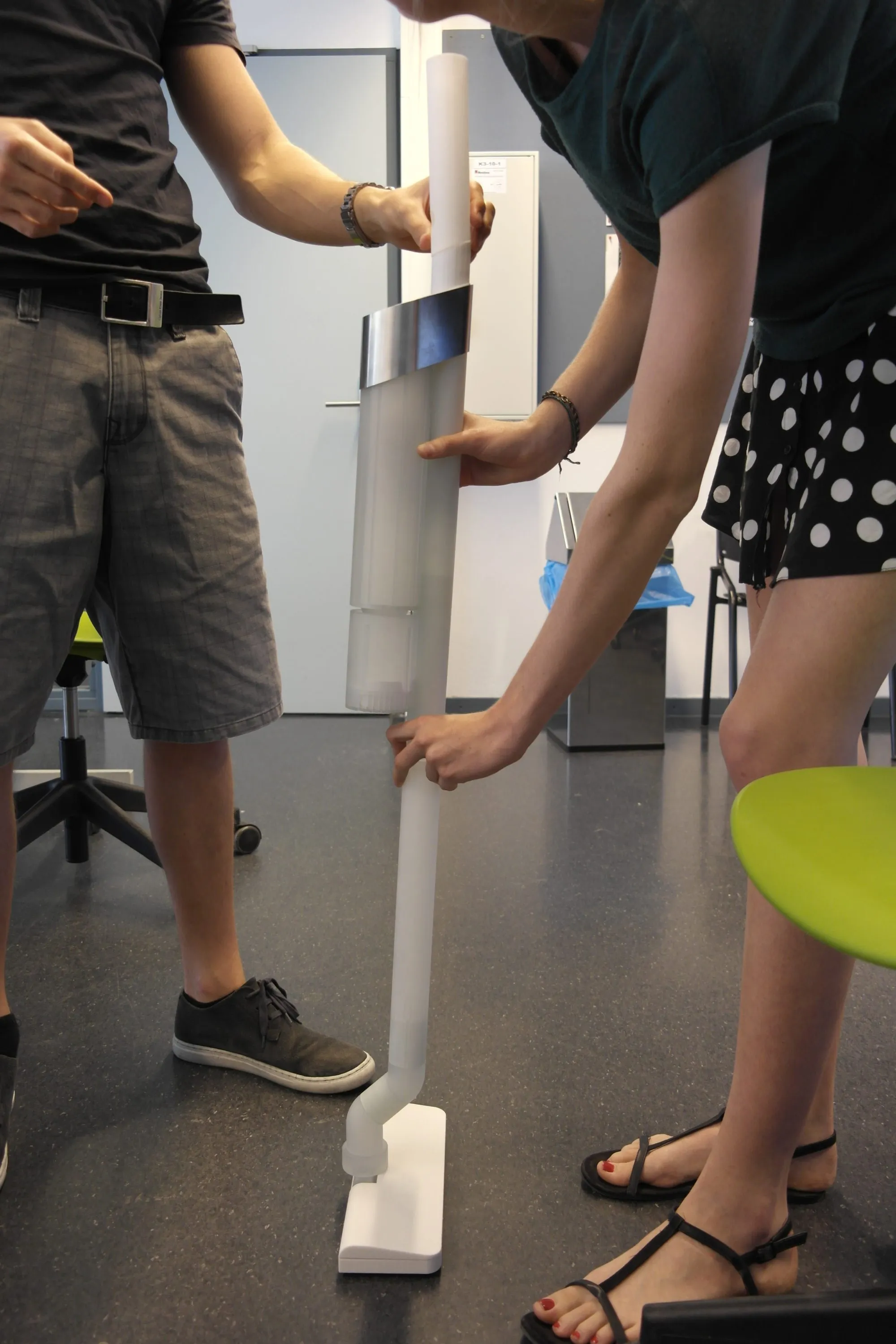
The bag cylinder splits away from the stick so a full bag lifts out and a new one drops in. Three movements, which was the target we set ourselves after the flap testing.
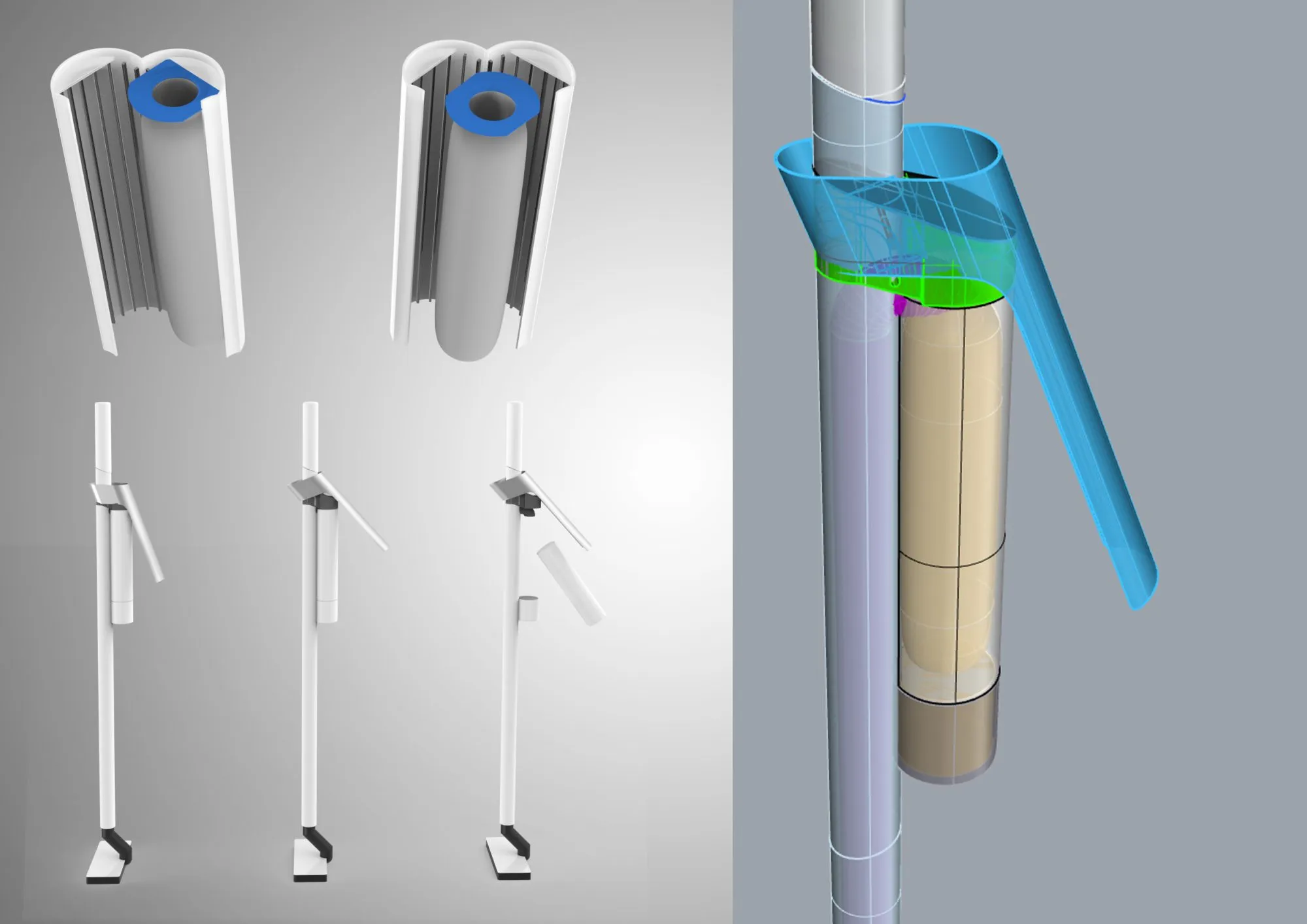
The working parts sit in a block partway up the stick: the airflow turn, the battery display behind glass, and the bracket. Pull the two tubes apart against the magnets and friction holding them, and the top half comes away as a handheld.
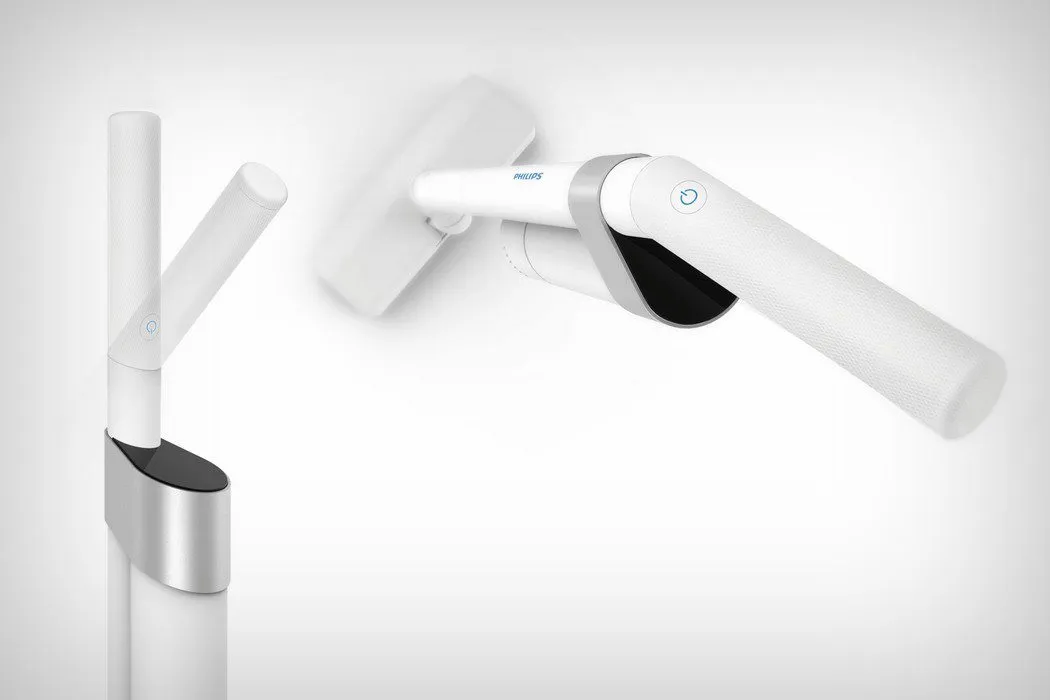
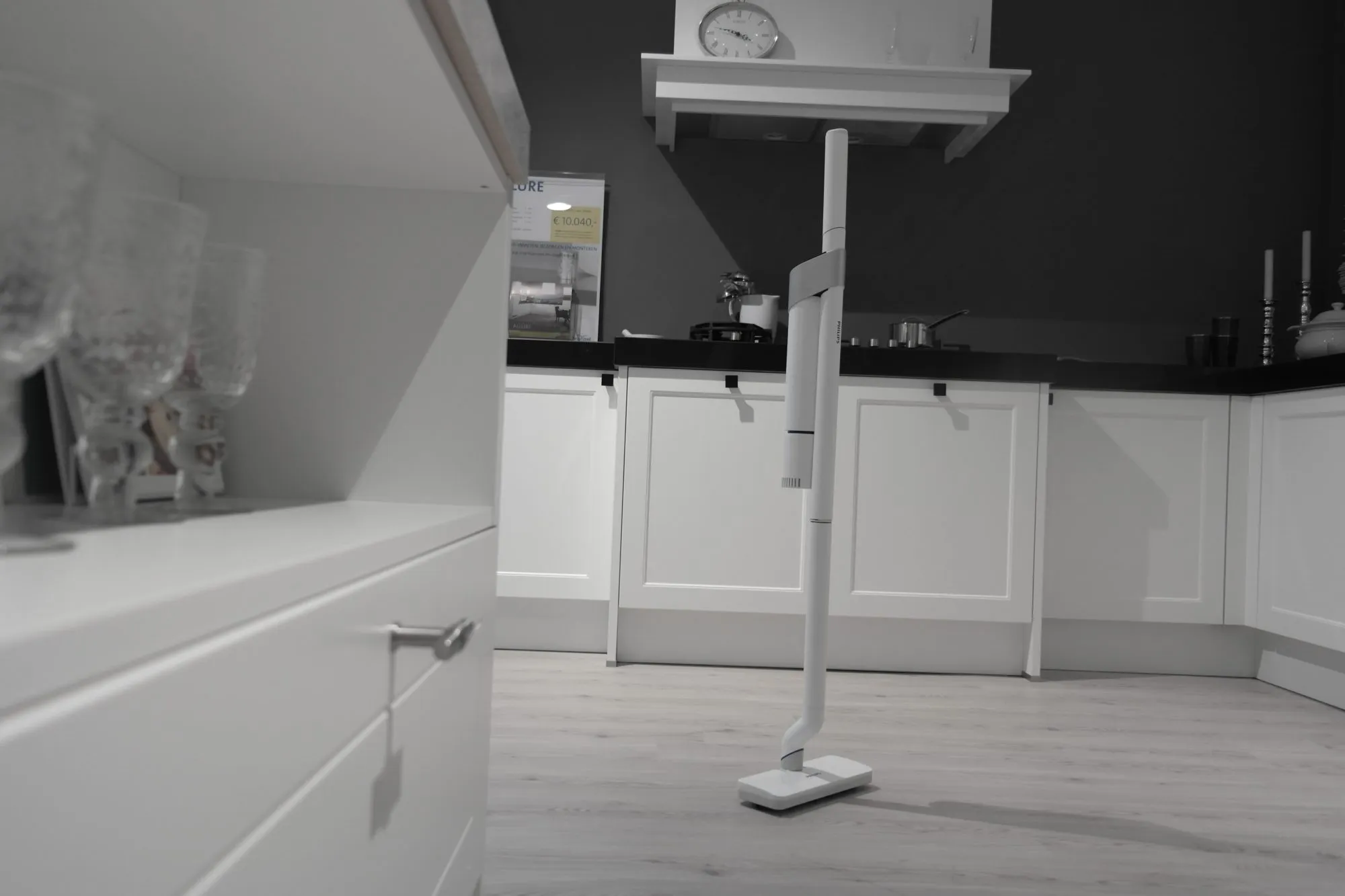
The nozzle is two ABS shells, 285 by 100mm, around a joint that rotates freely inside them. We kept the width of the existing Philips wipers so the rubber and the wheels carried over unchanged. It charges on a magnetic dock, 70mm square, screwed to the wall.
It came in at 2.2 kg against a 2.3 kg target, and around €45 to produce against a thirty to forty euro brief.
Impact
Thirty participants rated the form, the nozzle and the power button on how minimal, novel, appealing and unified they read. We presented the whole thing to Philips at the end of June 2016.
Philips took parts of it further. The turning handle and the bag arrangement were developed on and reached a product they later brought to market. Which one, and how far, is theirs to say rather than mine.
What I would still fix: the handheld separation leaks air and wobbles, and needs to be both tighter and easier to pull apart, which are not the same problem. The wheels sit too close together, so the nozzle tips forward under load. The tubes are too narrow to route the wiring comfortably. And the hinged wiper nozzle is still the more interesting answer.
We had a better idea, we tested it honestly, and it lost to the schedule rather than to the physics. Knowing which of those two killed something is worth more than the result.