Problem
A parent I interviewed early on told me she felt safer in the hospital than at home. That inverted everything I assumed about being ill.
After chemotherapy, children pass through neutropenia, when white blood cell counts drop and infection becomes dangerous. So parents check temperature and heart rate every few hours, at home, alone. In practice that means putting a thermometer in a small child’s mouth several times a day. The child resists. The parent insists. Nobody wins, and the house starts to feel like a ward.
The brief from Prinses Máxima Centrum was broader: involve parents better in their child’s care. I narrowed it to this.
Process
I couldn’t interview sick children directly, so I read parents’ blogs, visited the UMC in Utrecht, and interviewed a nurse practitioner, an oncologist, a child life specialist, a psychologist and a parent.
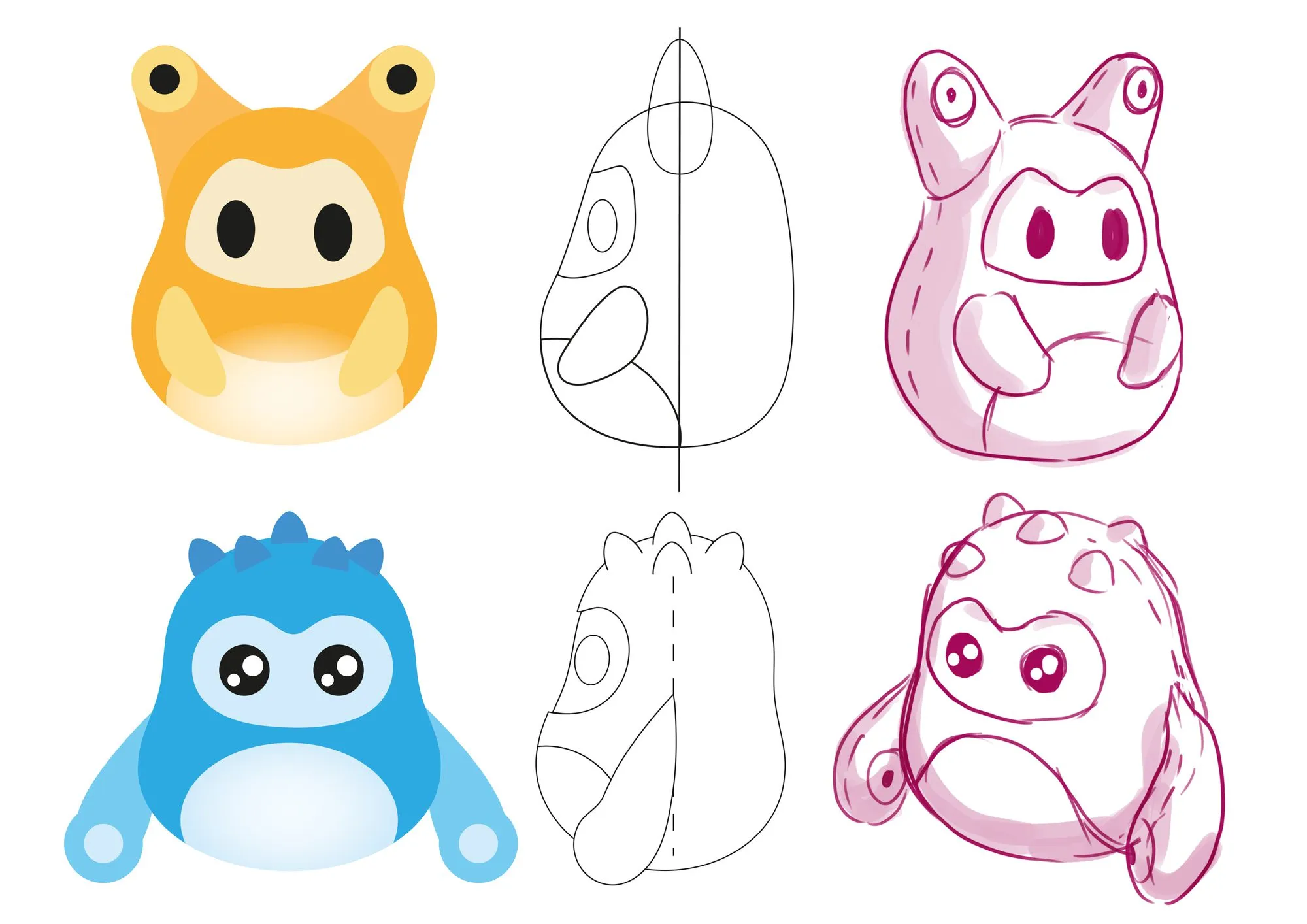
Three concepts came out: a sensor strip for clothing, a handheld accessory, and a companion toy. The toy won because children already treat soft toys as pets. The emotional bond was there before the electronics were.
I made the first characters in clay, then learned to sew.
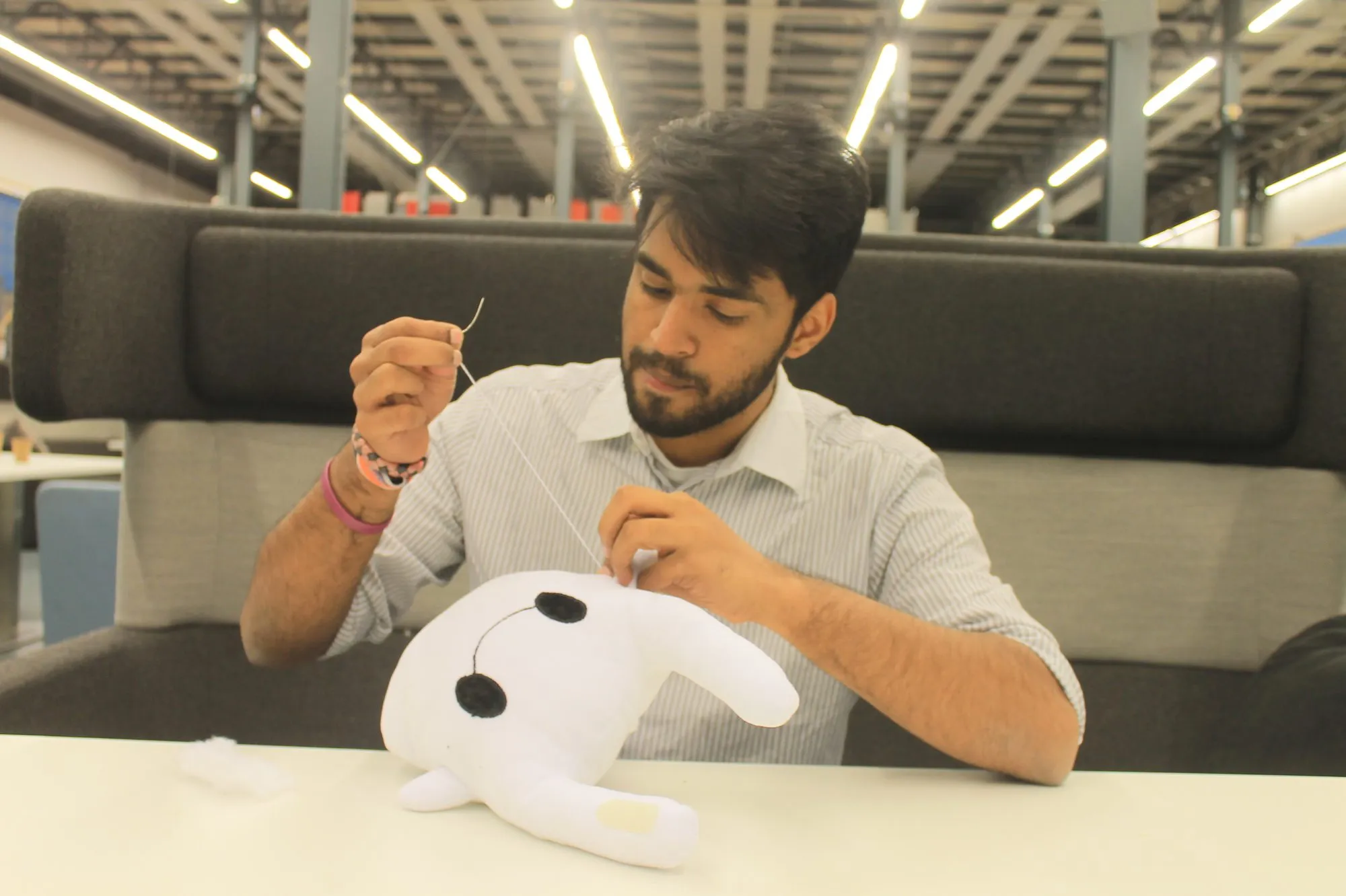
Three prototypes, each with the sensors somewhere different: ears, hands, eye. I took them to two schools and watched children aged 2–5 handle them.
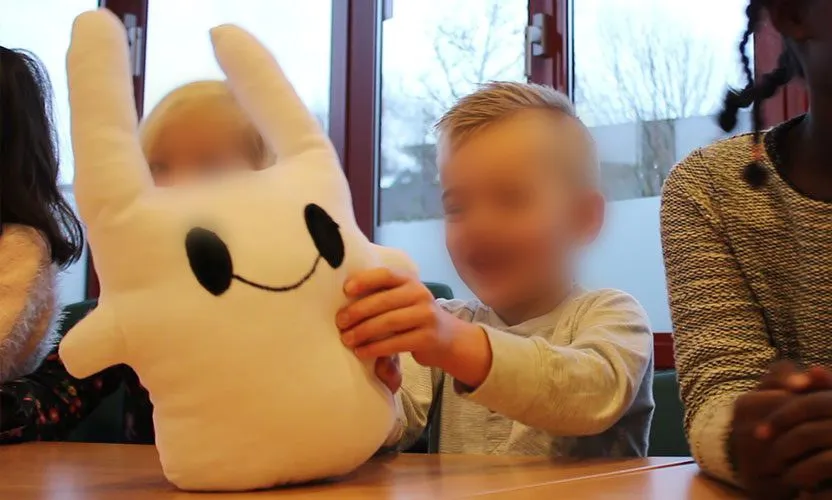
Asked which they preferred, they said “Allemaal!”, all of them. The details I had agonised over were invisible to them; how the toy sat in their arms was not.
Solution
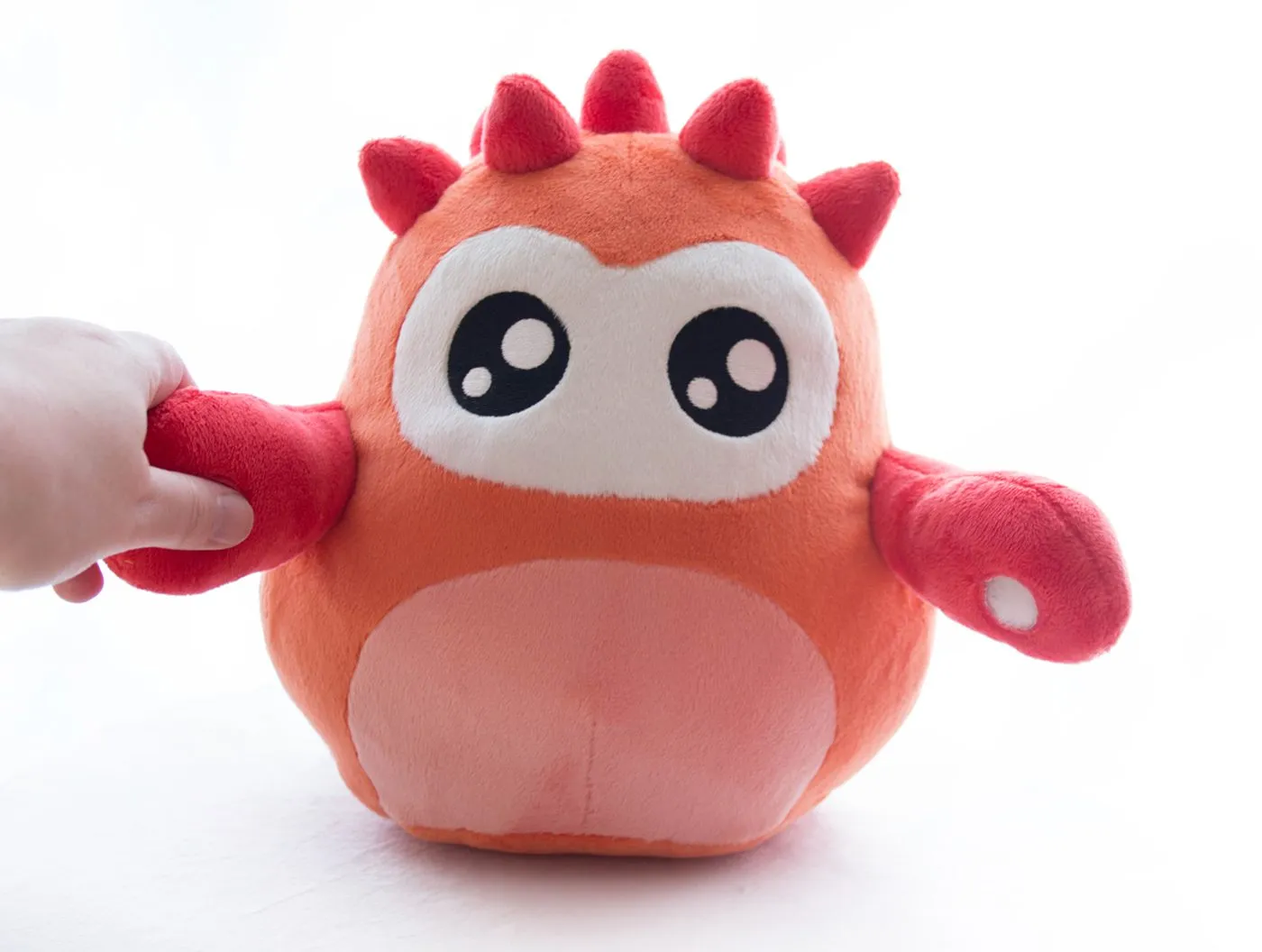
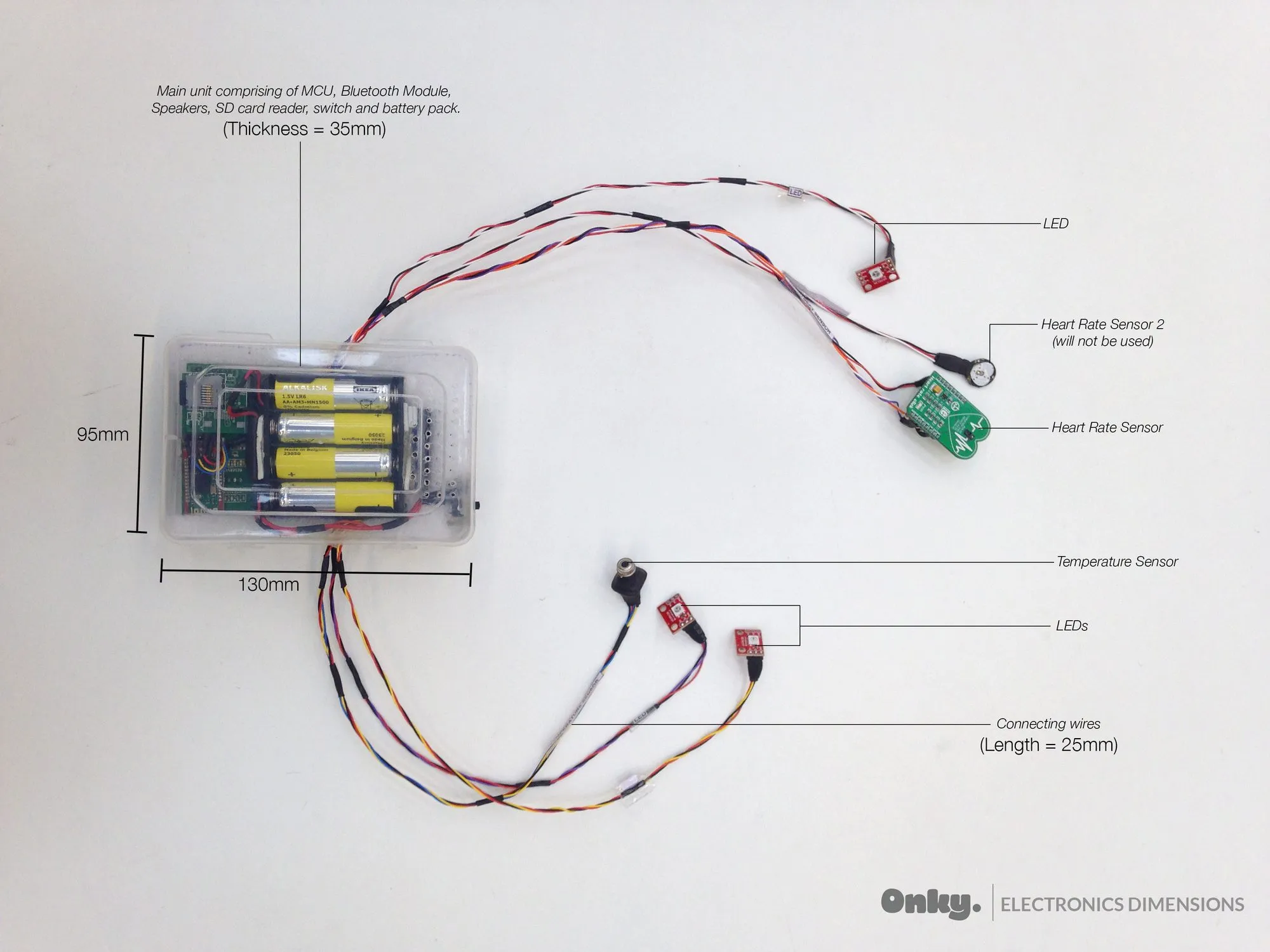
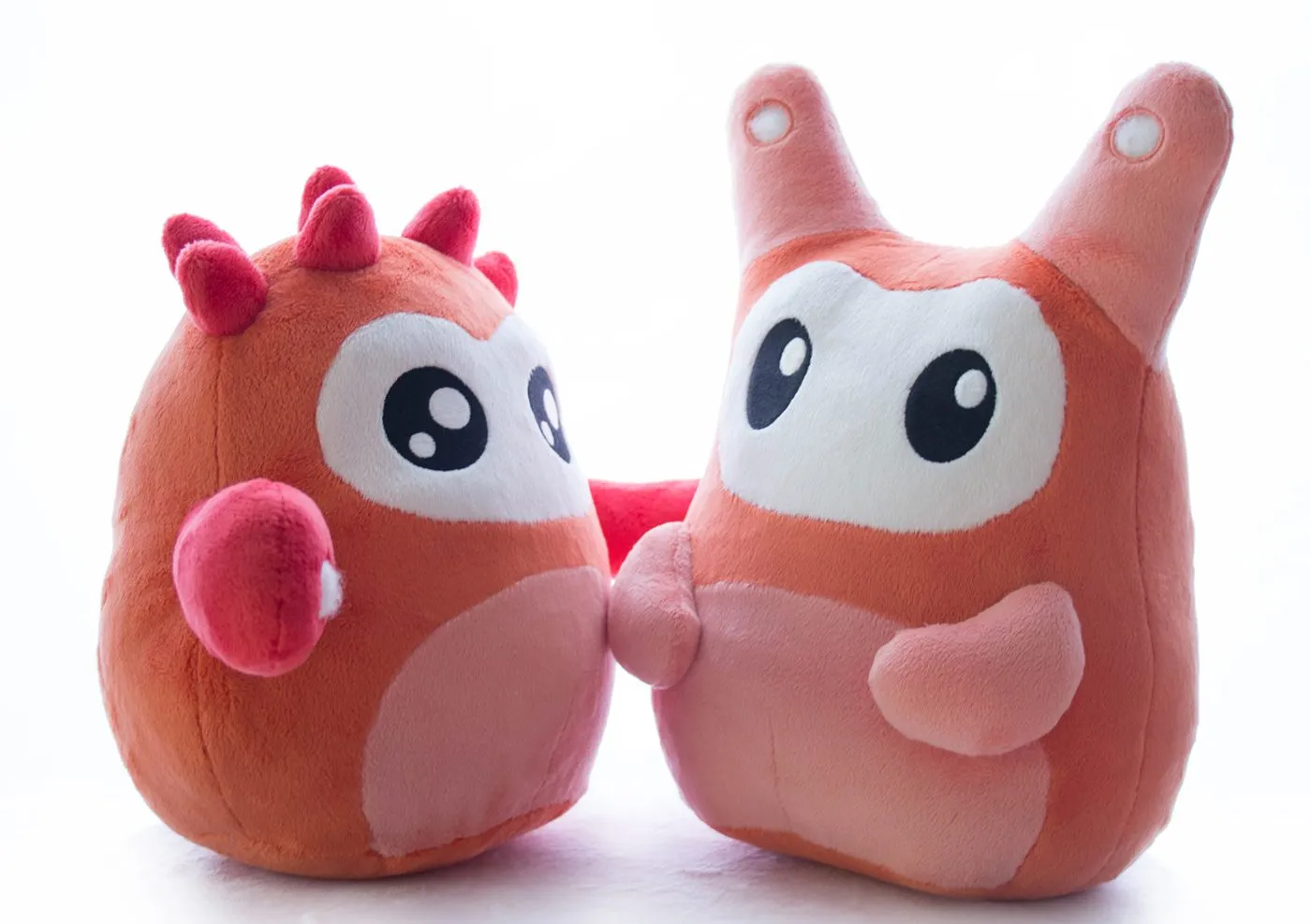
Onky is a plush toy with infrared and pulse sensors hidden in its elongated ears, and a sealed compartment in its body holding the battery, microcontroller and radio. The child grabs the ears (the shape asks for it) and the reading goes to the parent’s phone.
The rounded base and short arms guide a small child to lift it. The eyes use a contrasting fabric so they feel different under the fingers. No screen, no wristband, no visible medical object anywhere.
Impact
The clearest signal that the character worked cost nothing. A mentor I’d shown the video to sent me a photo of his daughter’s drawing of Onky, made from memory after watching it once.
The hospital liked the concept but manufacturing wasn’t their business. UNGA, a toy company in Amsterdam, acquired it and brought me in to develop it into something they could pitch to a manufacturing partner.
I worked with UNGA’s toy designer on two production plush designs and dimensioned them for a Dutch plush maker.
The electronics were the hard part: the heart-rate readings were erratic, the student building them quit mid-project, and I spent most of the first month finding and briefing an outside firm to rebuild the hardware to spec.
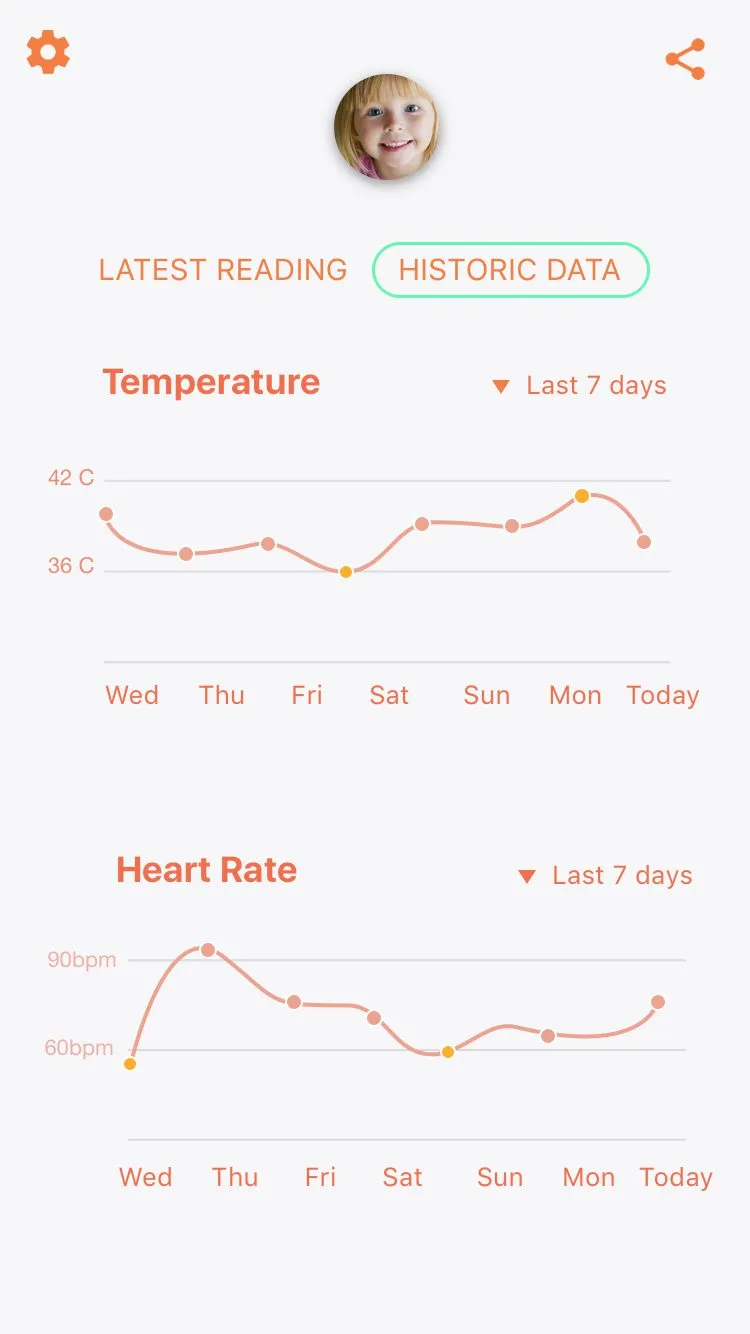
I designed and prototyped the parent app in Sketch and Marvel, and ran the naming and logo work that produced “Onky”.
I handed the project over complete: hardware schematics, sensor placement, plush specifications, app designs and assets, and the research behind all of it. UNGA took it forward from there.